




Novi članak objavljen u časopisu Frontiers in Public Health
Naslov
Investigation of relation between cyber hygiene and news veracity judgements
Autori
- Sabina Baraković
- University of Sarajevo, , Sarajevo, Bosnia and Herzegovina
- Nejra Pezo
- University of Sarajevo, , Sarajevo, Bosnia and Herzegovina
- Jasmina Baraković Husić
- University of Sarajevo, Faculty of Electrical Engineering, Sarajevo, Bosnia and Herzegovina
Sažetak
Cyber hygiene is often assumed to enhance individuals’ ability to evaluate the veracity of online information, with potential implications for decision-making, social trust, and resilience to misinformation. However, empirical evidence regarding the relationship between cyber hygiene and news-veracity judgment remains limited.
Methods:
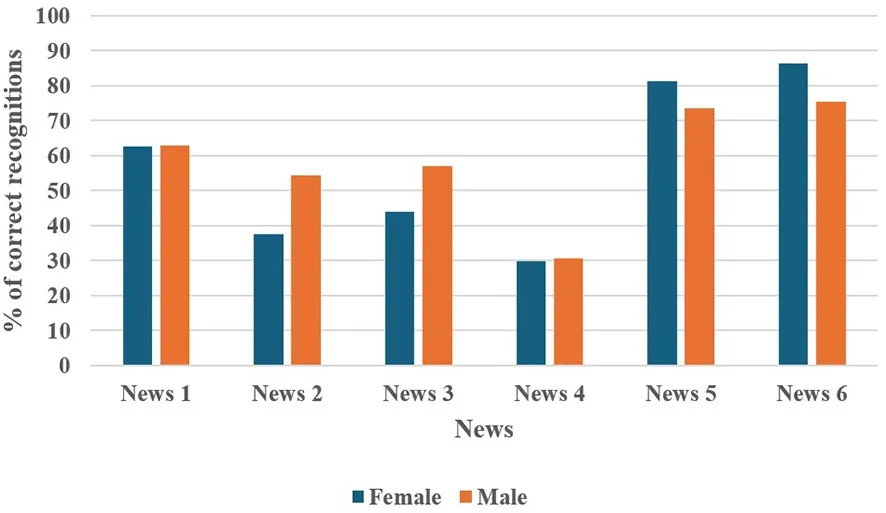
This exploratory cross-sectional study examined associations between cyber hygiene and news-veracity judgment among 306 participants. Cyber hygiene was assessed through measures of awareness, behavior, and knowledge. News-veracity judgment was operationalized through participants’ evaluations of six curated news stimuli (four true and two false items).
Results:
No consistent relationship was observed between cyber hygiene awareness, behavior, or knowledge and participants’ news veracity judgments in the present sample. Although some individual cyber-hygiene knowledge items showed statistically significant associations with specific news stimuli, these effects were not consistent across items and did not indicate a stable overall relationship. However, gender differences emerged, with women displaying greater distrust and skepticism toward news content, which does not imply the increased accuracy in news veracity judgement.
Discussion:
The findings provide no evidence of a stable relationship between the measured dimensions of cyber hygiene and news-veracity judgment in this sample. These results suggest that cyber hygiene, as assessed in the present study, may not directly translate into improved evaluation of news credibility. By reporting largely null findings, the study contributes to refining theoretical assumptions regarding misinformation resilience and highlights the need for future research examining the interaction of cyber hygiene, psychosocial factors, and response tendencies in news-veracity judgment.
DOI
- 10.3389/fpubh.2026.1962217
URL
- Full article available on: https://www.frontiersin.org/journals/public-health/articles/10.3389/fpubh.2026.1962217/full
Elektronski ISSN
2296-2565
Izdavač
Frontiers Media S.A.
Faktor uticaja
4.1(2025)


