

BASIC INFORMATION
- Project title: Improvement of data plane flexibility in software-defined networks by applying the paradigm of deep network programmability
- Project location: Laboratory for Software-Defined Networks
- Funding body: Federal Ministry of Education and Science
- Project leader: Assistant Professor Pamela Njemčević, PhD, Dipl. Eng. (Full Professor Mesud Hadžialić, PhD, Dipl. Eng.)
- Project budget: BAM 11,909.99
- Project type: Local research project
ABOUT THE PROJECT
Research focus
Today’s computer networks, comprising numerous network devices such as routers, switches and devices with additional functionality (e.g. firewalls), have become excessively complex to manage and maintain. These devices run complex algorithms and protocols, whose implementations are often closed-source. Network administrators are responsible for applying configuration policies across this highly heterogeneous environment. They typically do so by configuring network devices individually through interfaces that vary from one vendor to another. Standardizing network interfaces and protocols to unify the network ecosystem and improve interoperability is a complex and lengthy process. This approach has slowed innovation while increasing the complexity and cost of network maintenance and management. In response, researchers in the 1990s applied the concept of relatively straightforward computer reprogramming to computer networks, laying the foundations for Software-Defined Networking (SDN). SDN is a paradigm in which the data plane is separated from the control plane. All “network intelligence” is centralized in the application and control planes. The application plane runs network applications, including routing algorithms, quality of service (QoS) mechanisms, and network monitoring and management applications, and generates rules for handling network traffic. Based on these rules, controllers generate forwarding tables and configure packet switching nodes accordingly. Finally, the packet switching nodes in the data plane (routers and switches) simply forward packets using fast forwarding table lookups. The SDN architecture follows two principles:
- simplicity, reflected in packet forwarding processes in the data plane; and
- generality, reflected in the technology-agnostic nature of the SDN architecture.
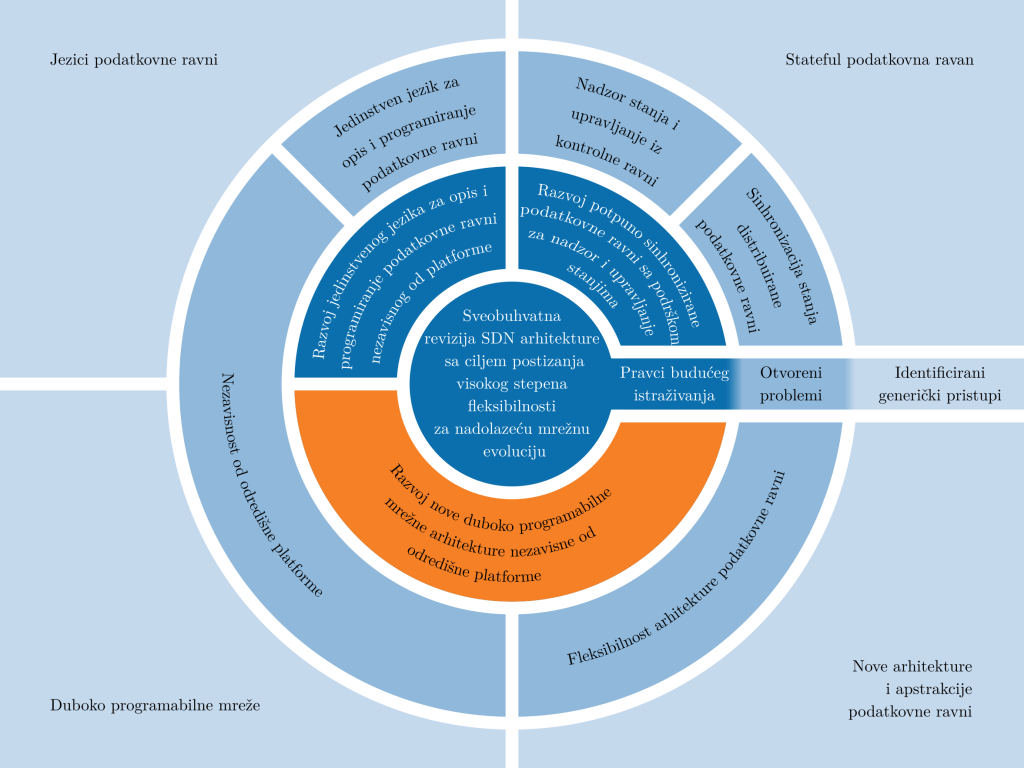
However, implementing these principles has reduced network flexibility, particularly in the data plane, because packet switching nodes do not provide a means of controlling processes below the forwarding table lookup level. Greater control over data plane processes can be achieved by implementing packet switching nodes using reconfigurable hardware based on field-programmable gate array (FPGA) technology. This research therefore focuses on mechanisms for increasing data plane flexibility in software-defined networks.
Research objective
The research aims to improve data plane flexibility in software-defined networks by applying the deep network programmability paradigm on reconfigurable hardware.
Research tasks
The research objective is to be achieved through the following tasks:
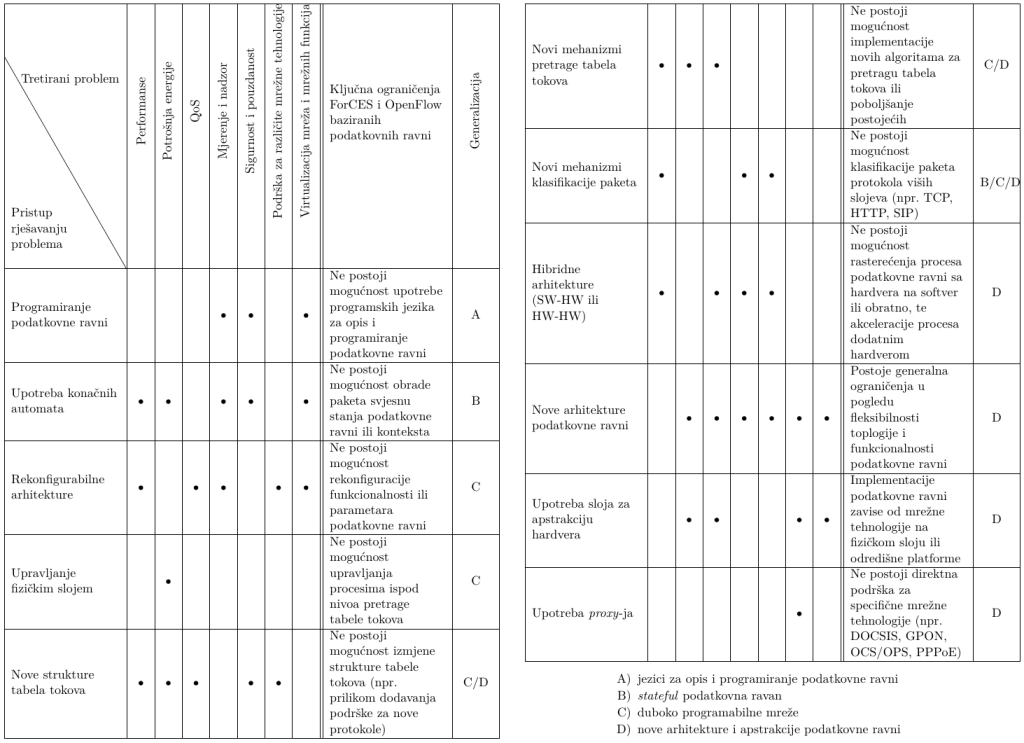
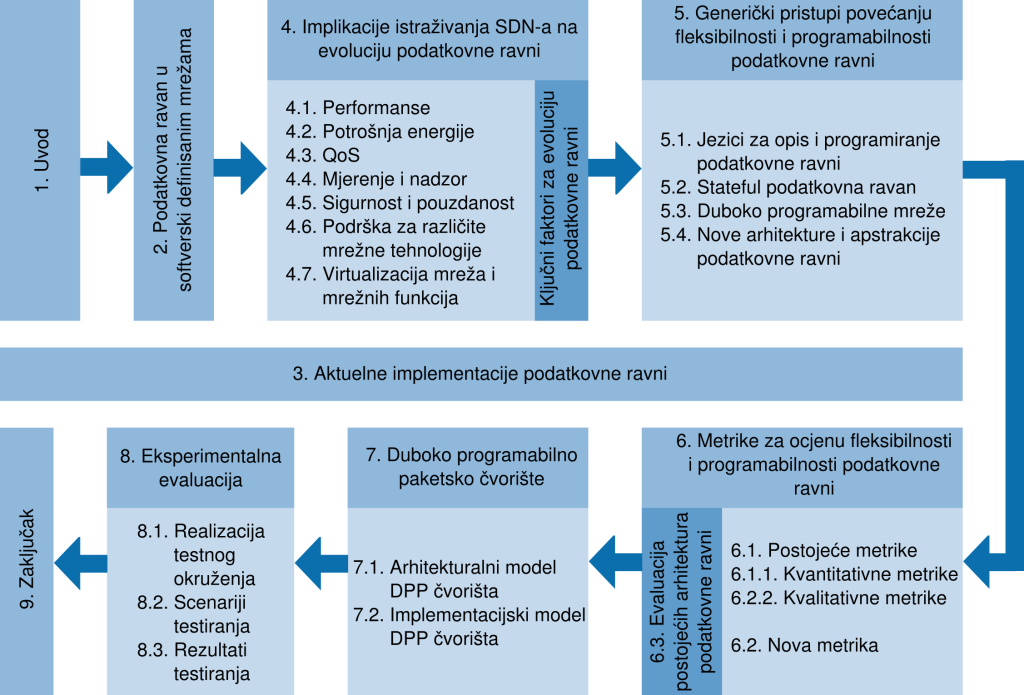
- conducting a systematic review of research on the data plane in software-defined networks to identify factors that influence changes to packet switching node architectures;
- conducting a systematic review of existing software, hardware and hybrid architectures for programmable packet switching nodes in software-defined networks;
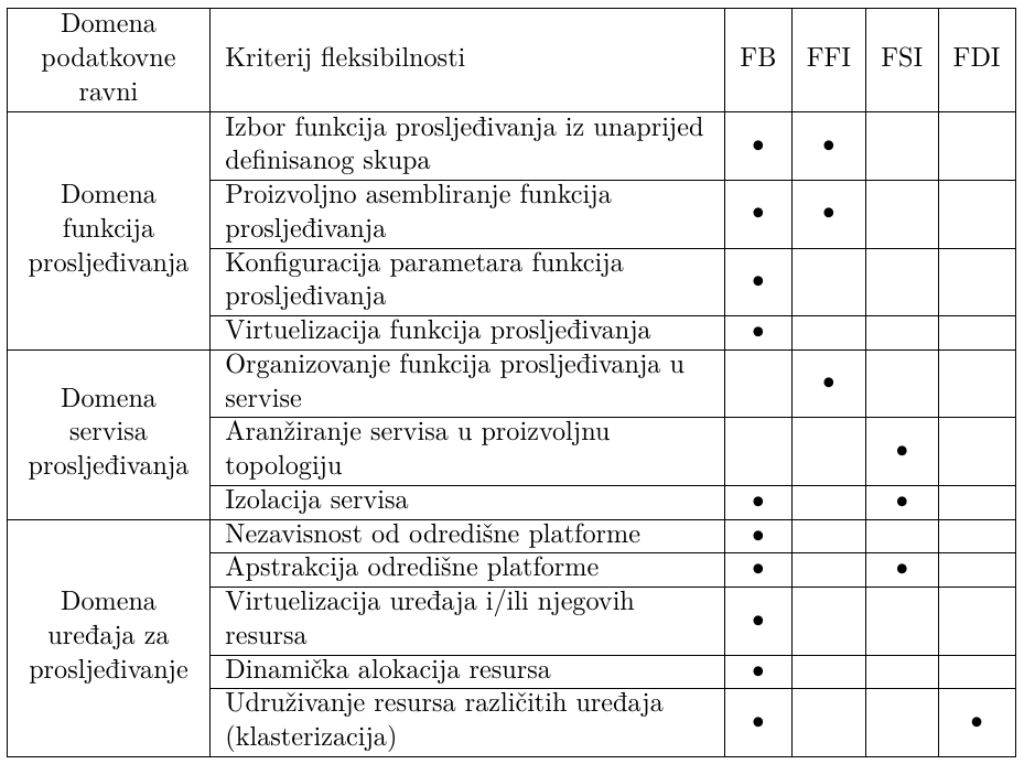
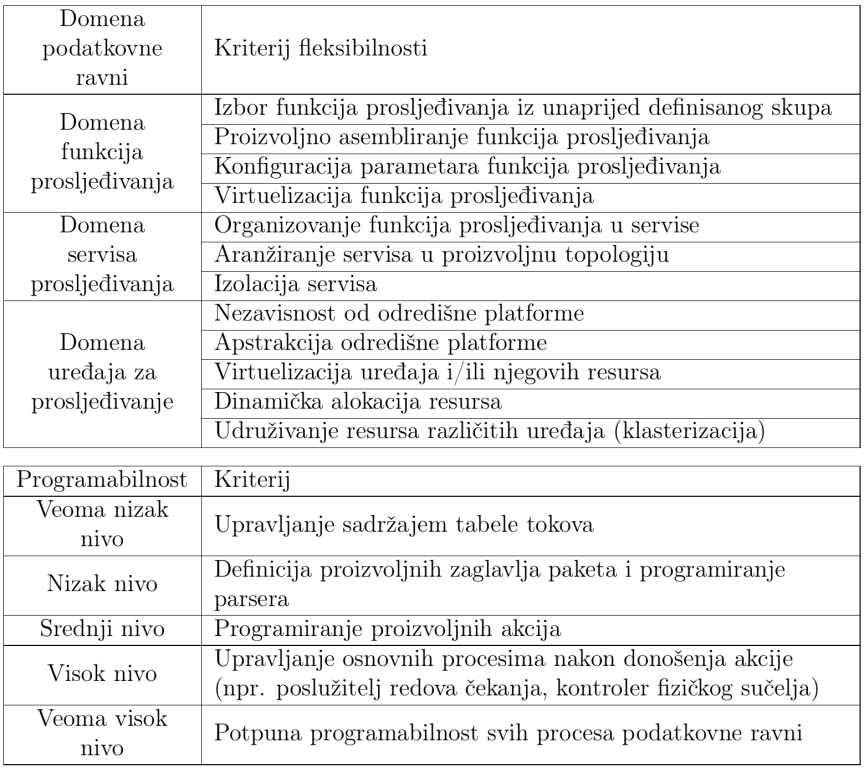
- selecting and/or developing a metric for assessing data plane flexibility in terms of the depth of packet switching node programmability;
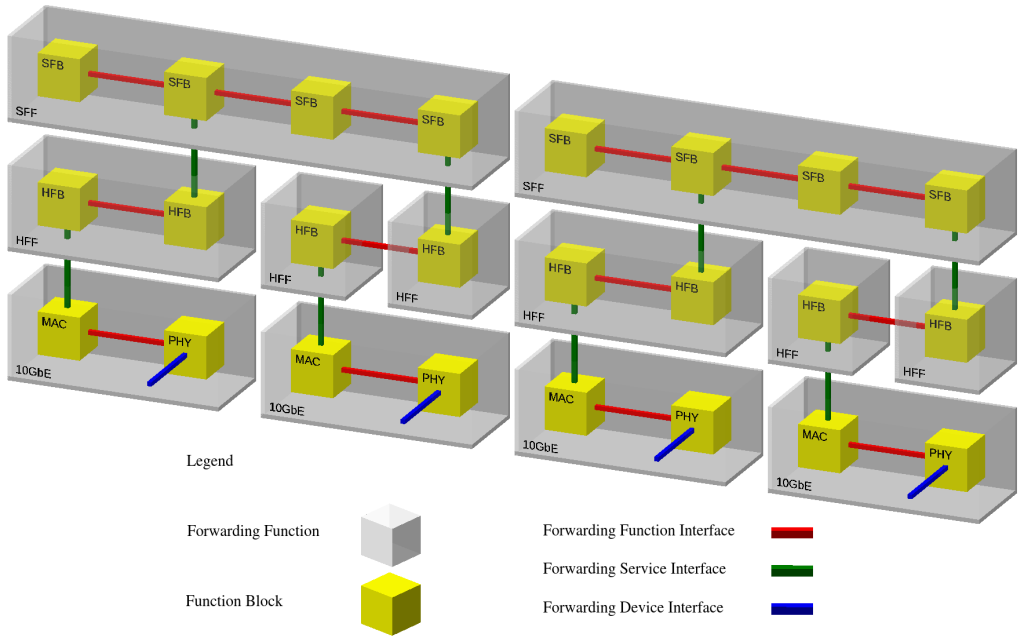
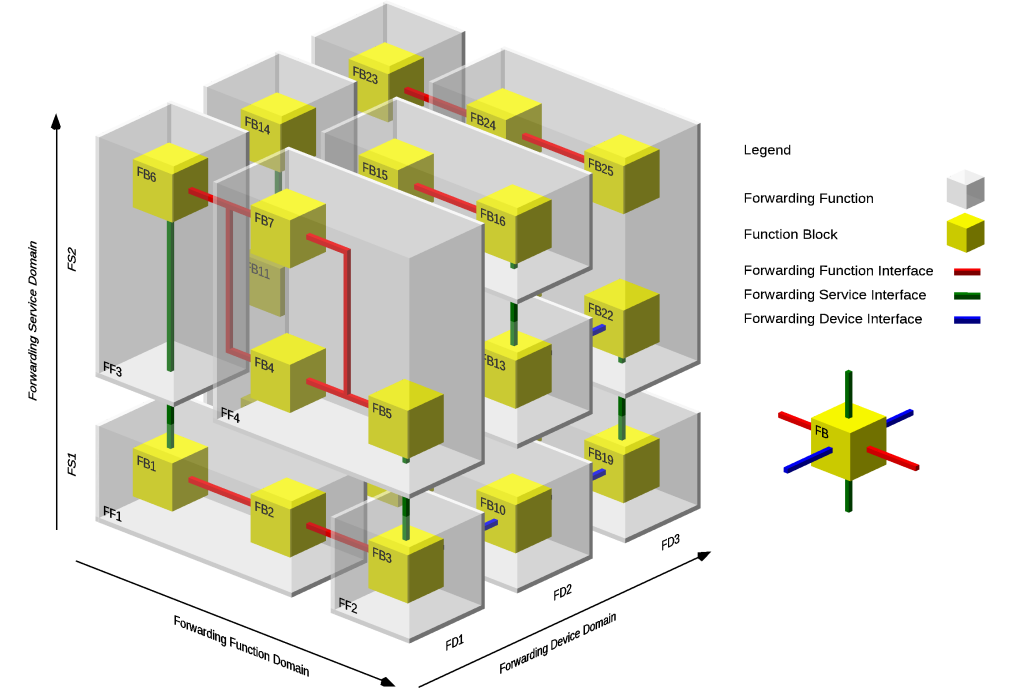
- developing a new architectural model for a deeply programmable packet switching node;
- implementing a deeply programmable packet switching node on an FPGA development kit;
- experimentally verifying and validating the proposed architecture and disseminating the results.
Expected research outcomes
The expected scientific and practical outcomes are:
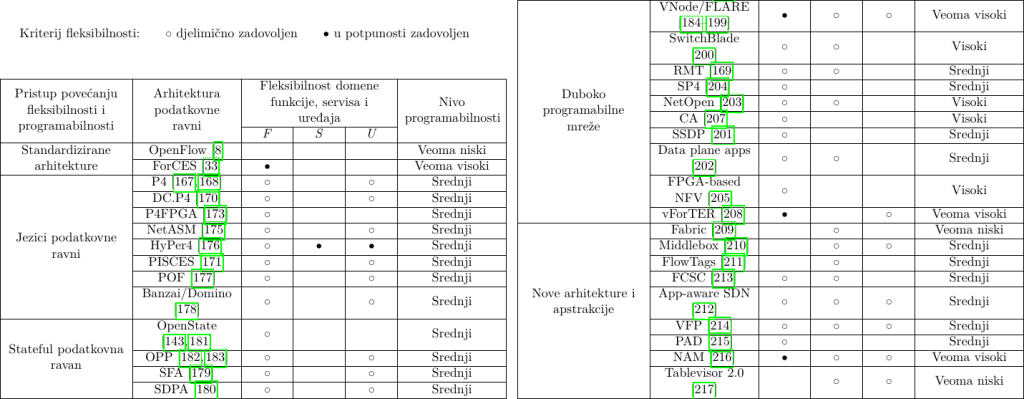
- application of an original metric to systematically classify the results of recent research on the data plane in software-defined networks;
- a new metric for assessing data plane flexibility in software-defined networks in terms of the depth of packet switching node programmability;
- a new architectural model for a deeply programmable packet switching node that can improve SDN data plane flexibility;
- development of intellectual property cores (IP cores) suitable for use on FPGA development systems;
- a deeply programmable packet switching node implemented on an FPGA development kit.
Research results
Published research papers:
- E. Kaljic, A. Maric, P. Njemcevic and M. Hadzialic, “A Survey on Data Plane Flexibility and Programmability in Software-Defined Networking,” in IEEE Access, vol. 7, pp. 47804-47840, 2019. doi: 10.1109/ACCESS.2019.2910140
- E. Kaljic, A. Maric, M. Hadzialic, “A novel qualitative metric based approach to the improvement of data plane flexibility in software-defined networks,” 2019 18th IEEE International Conference on Smart Technologies IEEE EUROCON, Novi Sad, 2019
- E. Kaljic, A. Maric and P. Njemcevic, “An implementation of a deeply programmable SDN switch based on a hybrid FPGA/CPU architecture,” 2019 18th International Symposium INFOTEH-JAHORINA (INFOTEH), East Sarajevo, Bosnia and Herzegovina, 2019, pp. 1-6. doi: 10.1109/INFOTEH.2019.8717768
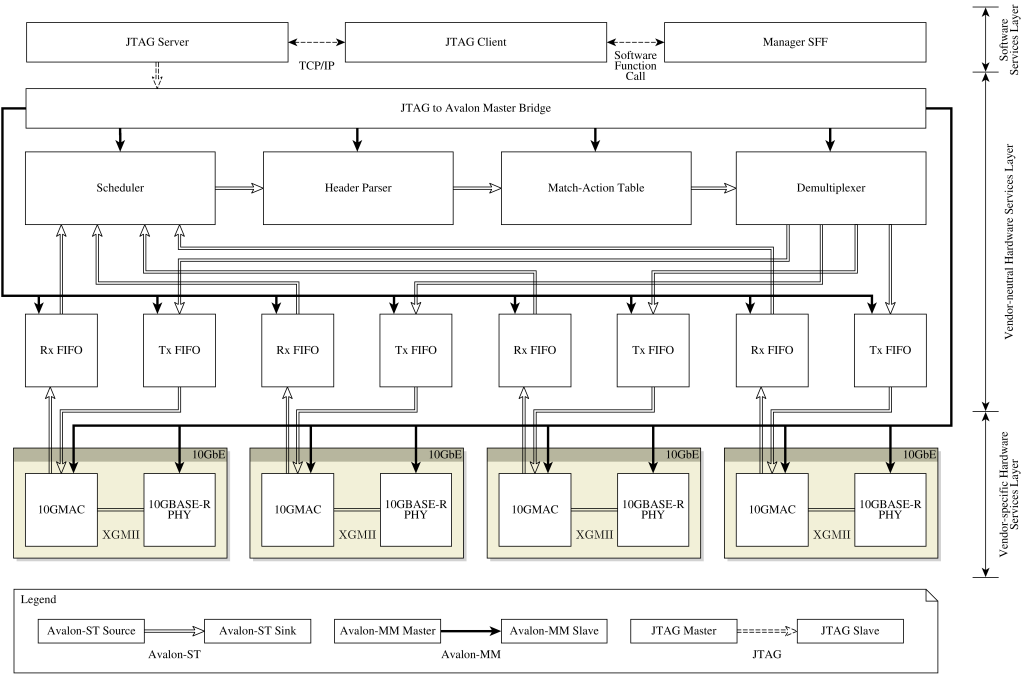
Implementation of the deeply programmable packet switching node: